

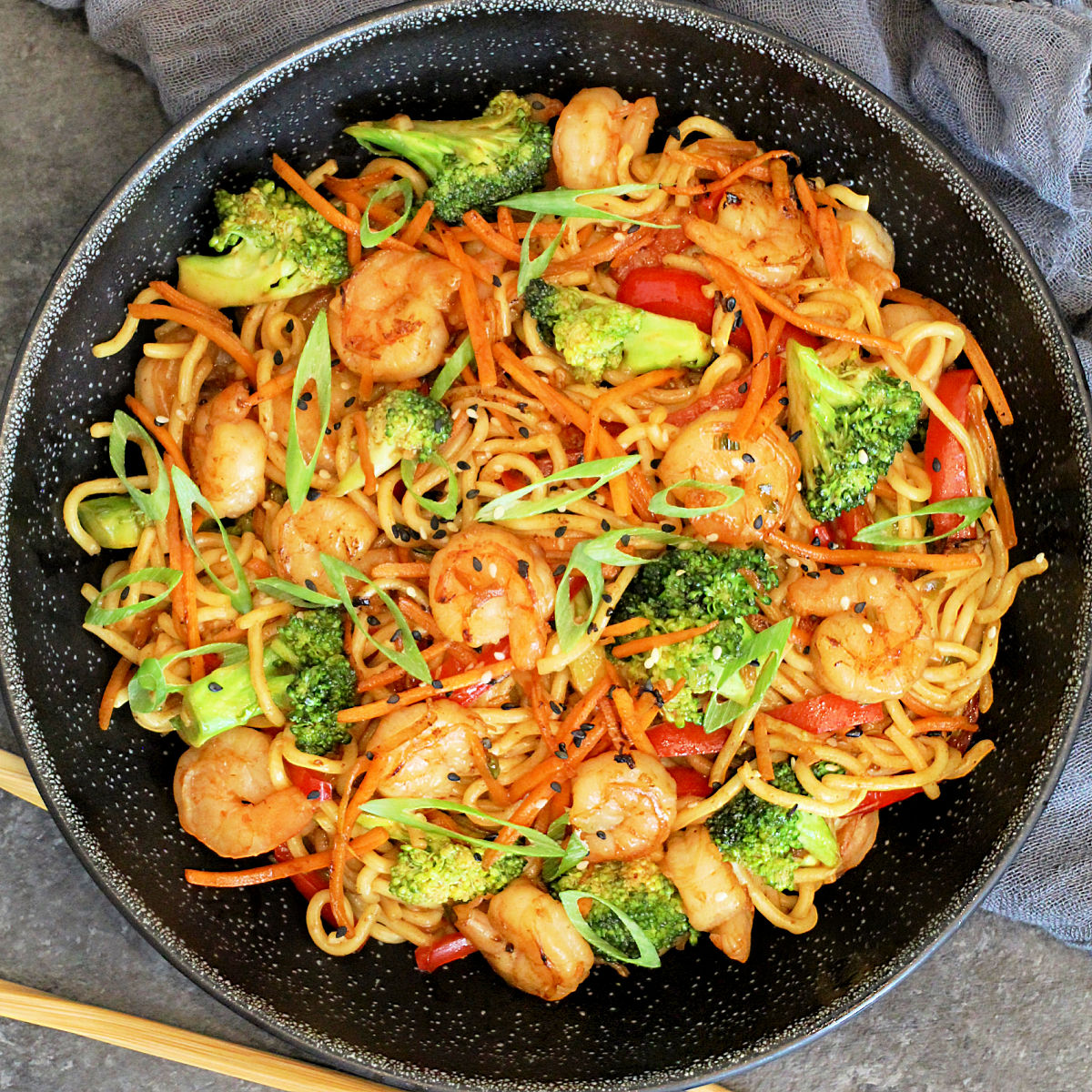
This tasty Shrimp Stir Fry with Noodles features succulent shrimp, colorful veggies, and comforting noodles, all coated in a delicious sweet and savory sauce. This easy recipe is a one-pan dish that's better than take out and can be made in just 30 minutes!

This tasty shrimp stir fry with noodles is an easy recipe that's quick to make, packed with flavor, and healthier than take out! It's always a good idea to have an arsenal of quick and easy weeknight dinner recipes in your back pocket. Some of my favorites are my bang bang salmon bites, spicy tuna poke bowls, and Thai salmon curry.
Now I'm excited to bring you this healthy shrimp stir fry that's packed with succulent shrimp, vibrant veggies, comforting noodles, and a delectable stir fry sauce. It's a dish that your whole family will love that's both nourishing and easy to make in just one pan.
In a world where take out can often win the convenience race, this tasty shrimp stir fry with noodles offers a healthier and equally convenient option. So the next time you're looking to solve the dinner dilemma, try this easy recipe. After all, a meal that's quick to make, brimming with flavor, and healthier than takeout is a win-win for everyone!
Jump to:
Why You'll Love This Dish
- Quick and Easy- make this dish in just 30 minutes!
- Loaded with Fresh Veggies- packed with colorful vegetables rich in vitamins, minerals, and antioxidants
- Succulent shrimp- provide lean protein and heart-healthy omega-3 fatty acids, which have numerous health benefits
- Packed with Flavor- the sweet and savory sauce made with hoisin sauce provides tons of flavor. Both kids and adults will love it!
- Customizable- tailor this recipe to your preferences with your favorite noodles, vegetables, and protein
- Perfect for Meal Prep- cook up extra for lunches and dinners throughout the week
Doctor's Tips
- Shrimp is one of my favorite proteins to cook because it's delicious, cooks in minutes, and is good for you too!
- Seafood is a staple of the Mediterranean diet, which is a healthy-eating plan that incorporates the traditional flavors and ingredients of the countries that border the Mediterranean Sea.
- Numerous studies have shown that a Mediterranean-style diet can help reduce your risk of heart disease, stroke, diabetes, obesity, certain types of cancer, depression, and cognitive decline
- To learn more, read my post about the health benefits of seafood.
How To Make Stir Fry
A good stir-fry can be a home cook's best friend! But sometimes stir fry can end up less than perfect with limp, soggy vegetables or dry, tough meat. And how do you prevent the ingredients from sticking to the pan?
Here are some simple stir frying tips to guarantee that your next stir fry attempt will be a success!
1. Hot, hot, hot!
- Getting your wok or pan really hot before you start to cook is key to ensuring stir fry success. When your pan is hot, your meat will get seared, giving it a nice golden crust, leaving it juicy in the middle. Veggies will stay crisp with a firm bite. If you're a beginner, start with your temperature on medium high and adjust from there.
2. Use oil with a high smoke point and neutral flavor
- This is not the time to use your extra virgin olive oil! You want to use oil that can heat up to very high temperatures without burning and is also neutral in flavor to let the ingredients shine. Try peanut oil, canola, corn, soybean or grapeseed oil for best results. Dark sesame oil is used for seasoning- add it at the end of cooking to add delicious flavor.
3. Mise en Place
- This classic French technique of prepping all of your ingredients ahead of time is how professional kitchens are able to push so many dishes out of the kitchen quickly every night. When making stir-fry, the cooking process is really quick so it's key to have all of your ingredients prepped and chopped when you're ready to start cooking.
4. Don't overcrowd the pan
- Although you may be tempted to throw all of your ingredients into the pan at once, this will just steam your ingredients rather than sautéing them, leading to tough meat and mushy veggies. When cooking meat, make sure each piece comes into contact with the surface of the pan- you may need to cook it in batches to ensure this. Don't stir the pieces around too much- let them develop a golden color on the outside.
5. Cook in steps
- The different components of stir-fry are usually cooked in stages. Sear the meat first then remove it from the pan. Vegetables go in next. Veggies that take a longer time to cook like broccoli or eggplant go in first followed by veggies that cook quickly such as snow peas or spinach. Then, the meat is added back and the sauce is added to finish the dish. This ensures that nothing gets overcooked and that each component is cooked to perfection.
Ingredients
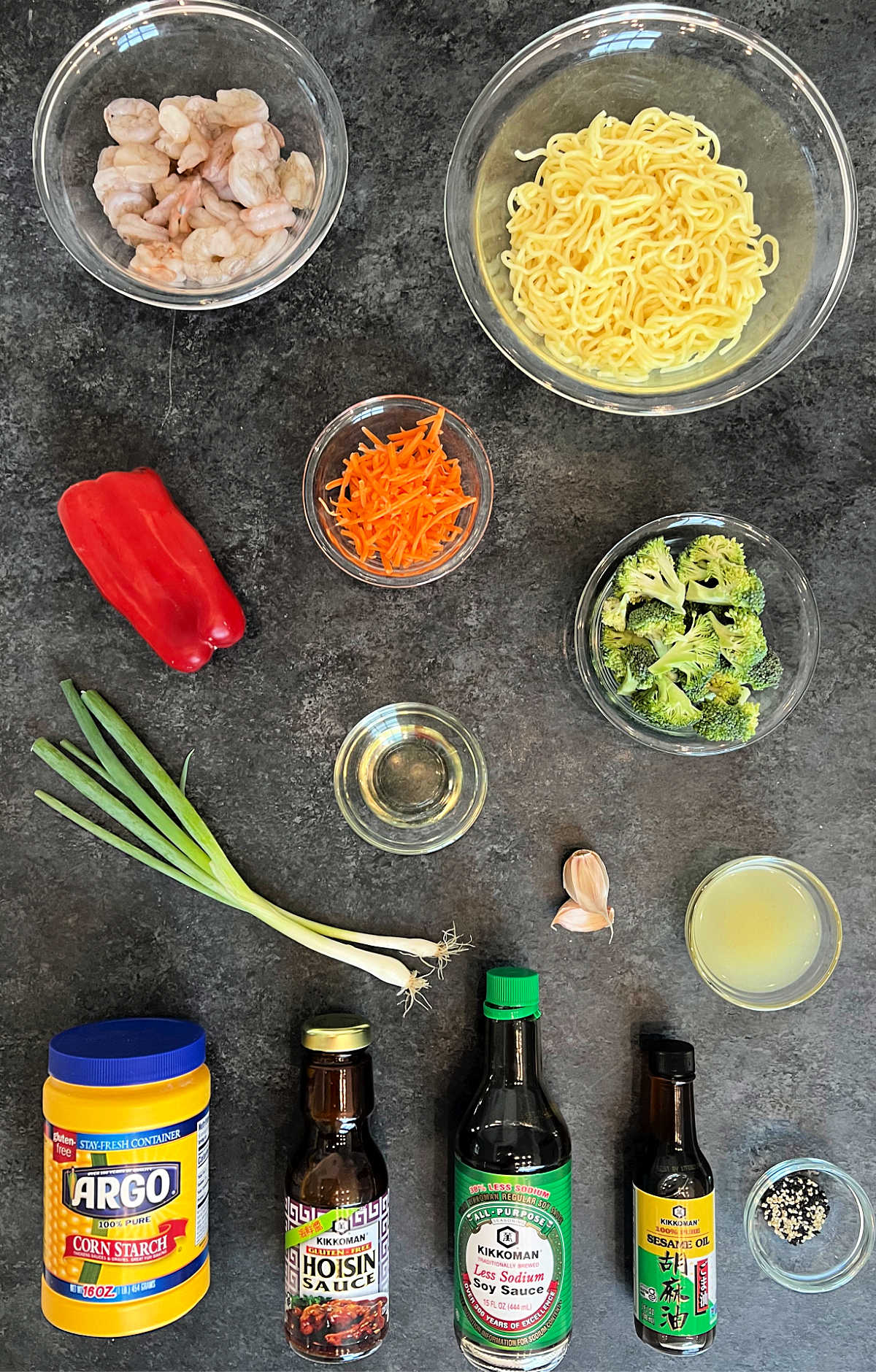
Ingredient notes and substitutions (see full ingredient list in recipe card at the bottom of the post):
- Shrimp- I use medium or large shrimp that have been peeled and deveined
- Noodles- if you can get fresh Chinese egg noodles from your local Asian grocery store, use them. Otherwise, I often use these hokkien noodles from my local grocery store that are already cooked and just need to be heated. You can use any kind of noodles including lo mein noodles, soba noodles, rice noodles, udon noodles, ramen noodles, or even spaghetti.
- Vegetables- I use a combination of broccoli florets, red bell pepper, and carrots. You can use other vegetables like snow peas, edamame, bok choy, mushrooms, onions, bamboo shoots or asparagus.
- Garlic- fresh garlic adds great flavor; you can also add some fresh ginger if you like
- Hoisin sauce- a thick sauce used in Chinese cuisine that has a rich, sweet, and slightly tangy flavor; you can use gluten-free hoisin sauce
- Soy sauce- I use reduced sodium soy sauce to control the amount of sodium in the dish; you can use tamari if you're gluten free
- Cornstarch- thickens the sauce
- Oil- use a neutral-flavored, high smoke point oil like peanut or grapeseed oil; don't use extra virgin olive oil
How To Make Shrimp Stir Fry with Noodles Step-By-Step

See recipe card below for full recipe details and instructions.
- Step 1- Whisk the sauce ingredients (hoisin sauce, soy sauce, sesame oil, chicken broth, and cornstarch ) together in a small bowl or measuring cup. Mix about a tablespoon of the sauce with the raw shrimp and let them marinate.
- Step 2- Heat oil in a large wok or sauté pan over medium-high heat and add the shrimp in a single layer. Cook the shrimp about 2 minutes until opaque. Remove from pan.

- Step 3- Add more oil to the pan and add the broccoli. Cook a couple of minutes, then add a little water to the pan and let the broccoli steam. Then, add the bell peppers and carrots. Cook 2-3 minutes more, until vegetables are crisp tender.
- Step 4- Remove the vegetables from the pan or push them to the sides of the pan and add the scallion whites and garlic. Cook until fragrant.
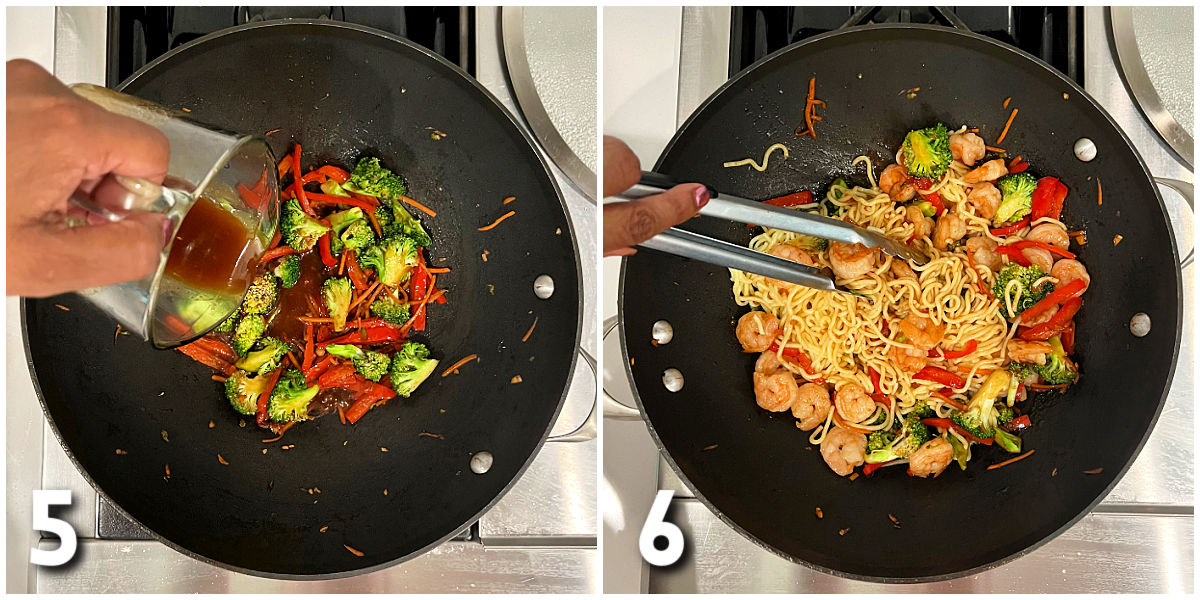
- Step 5- Add the vegetables back to the pan and toss to combine. Pour the sauce into the pan and cook a minute.
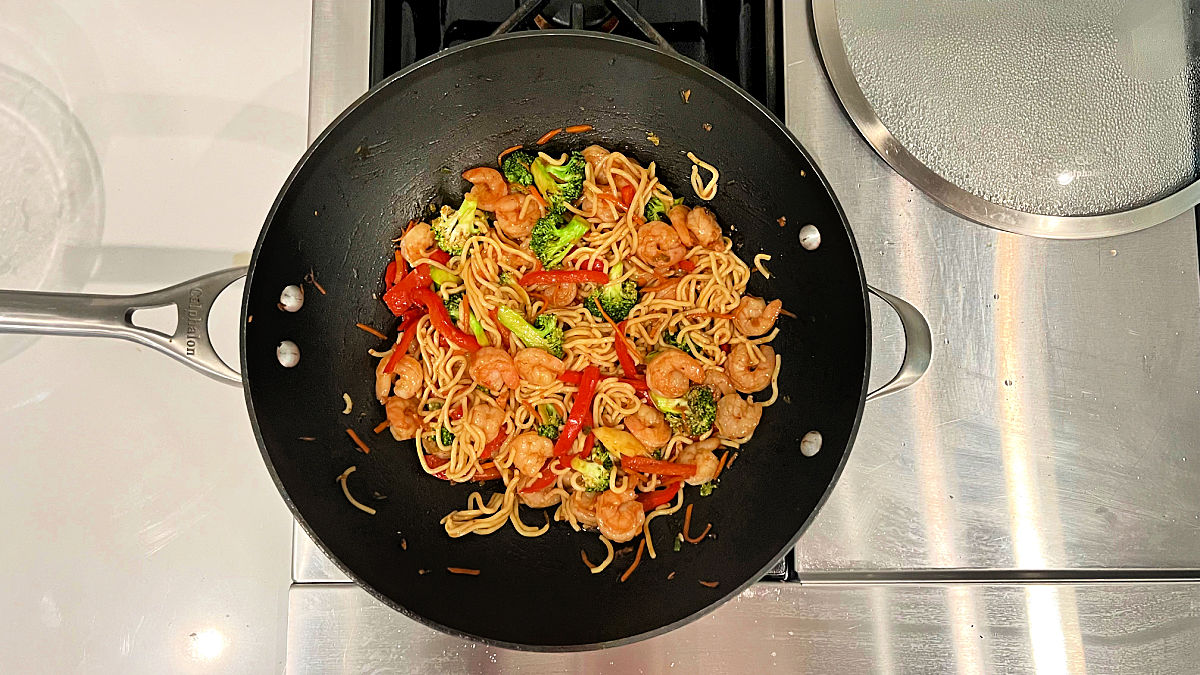
- Step 6- Add the shrimp and cooked noodles back to the pan and toss until the noodles are coated with the sauce and all the ingredients are heated through. Garnish with green onions and sesame seeds.
Chef's Tips
- Once you start cooking, this dish comes together very quickly so make sure you prep all of your ingredients first.
- You can use whatever vegetables you like in this dish but keep in mind that veggies that take a longer time to cook like broccoli or eggplant should go into the pan first followed by veggies that cook quickly like snow peas or spinach.
- I add broccoli to the pan before the other veggies, sauté it a couple of minutes, and then add a little water to the pan to steam it. Then I add the rest of the vegetables and finish cooking them all together.
- Using a julienne peeler will make prepping the vegetables easier.
- Use fresh Chinese egg noodles if you can find them. You can get them at Asian grocery stores. Otherwise, I often use these hokkien noodles from my local grocery store that are already cooked and just need to be heated. You can use different types of noodles like lo mein noodles, soba noodles, rice noodles, udon noodles, ramen noodles, or even spaghetti. For a low carb dish, you can use zucchini noodles.
- This recipe is very flavorful but not spicy. You can add some red pepper flakes or Sriracha for some extra heat.
Recipe FAQs
The easiest way to thicken stir fry sauce is with a cornstarch slurry. Mix 1 tablespoon cornstarch with 2 tablespoons cold water in a bowl. Add the mixture to the stir fry when it's almost done and let it simmer. The slurry will thicken the sauce almost immediately. Don't add cornstarch directly to hot liquids as it will clump up.
Yes, stir frying is a healthy cooking technique because it typically uses less oil than other techniques like deep frying. You can also incorporate a wide variety of colorful, nutrient-dense vegetables in stir fry. In addition, because stir fry cooks quickly, the ingredients retain their nutritional value.
Yes, if you're using uncooked noodles, then you should boil them before adding them to stir fry. I often use precooked noodles like these hokkien noodles from my local grocery store that are already cooked. Precooked noodles like these don't need to be boiled, they just need to be heated.
Fresh Chinese egg noodles are ideal for stir fry if you can find them. You can get them at Asian grocery stores. Otherwise, you can use different types of noodles like lo mein noodles, soba noodles, rice noodles, udon noodles, ramen noodles, or even spaghetti. For a low carb dish, you can use zucchini noodles.
More Tasty Recipes


YOUR PATH TO WELLNESS STARTS HERE!
Get my best healthy recipes and tips sent straight to your inbox!
Recipe

Shrimp Stir Fry with Noodles
Equipment
Ingredients
- 14.2 ounces fresh Hokkien stir-fry noodles (or 8 oz dry lo mein noodles or spaghetti) ** see note
- 3 tablespoons hoisin sauce
- 2 tablespoons reduced sodium soy sauce
- 1 ½ teaspoons sesame oil
- ¼ cup reduced sodium chicken broth
- 1 teaspoon cornstarch
- 4 teaspoons vegetable oil divided use
- 1 pound medium or large shrimp, peeled and deveined
- 2 cups broccoli cut into small florets
- 1 red bell pepper thinly sliced
- ½ cup julienned or shredded carrots
- 2 scallions, sliced, white and green parts separated
- 2 cloves garlic minced
- Optional garnish: sliced scallions and sesame seeds
Instructions
- Heat the noodles according to package directions. If using dried noodles, cook them according to package directions. Drain and set aside.
- Whisk the hoisin sauce, soy sauce, sesame oil, chicken broth, and cornstarch together in a bowl. Mix 1 tablespoon of the sauce with the shrimp in a bowl. Set the rest of the sauce aside .
- Heat 2 teaspoons of oil in a wok or large sauté pan over medium high heat. Add the shrimp and cook until they just turn opaque, about 2 minutes. Transfer shrimp to a plate.
- Pour the remaining 2 teaspoons oil into the pan and add the broccoli. Cook, stirring constantly, until broccoli starts to get charred around the edges, about 2 minutes. Add 2 tablespoons of water to the pan and cook another 2 minutes until the broccoli starts to soften and water evaporates. Add the bell pepper and carrots and sauté 3-4 minutes, stirring often, until they are crisp tender.
- Remove the vegetables or push them to the side of the pan and add the remaining 2 teaspoons oil. Add the scallion whites and garlic. Cook for 30 seconds until fragrant.
- Add the vegetables back to the pan and stir to combine. Pour the remaining sauce into the pan and cook for 1 minute. Then add the shrimp and cooked noodles to the pan and toss until everything is coated with the sauce and heated through. Sprinkle with scallion greens and sesame seeds. Serve immediately.
Notes
- ** Use fresh Chinese egg noodles if you can find them. You can get them at Asian grocery stores. Otherwise, I often use these hokkien noodles from my local grocery store that are already cooked and just need to be heated. You can use different types of noodles like lo mein noodles, soba noodles, rice noodles, udon noodles, ramen noodles, or even spaghetti. For a low carb dish, you can use zucchini noodles.
- Once you start cooking, this dish comes together very quickly so make sure you prep all of your ingredients first.
- You can use whatever vegetables you like in this dish but keep in mind that veggies that take a longer time to cook like broccoli or eggplant should go into the pan first followed by veggies that cook quickly like snow peas or spinach.
- This recipe is very flavorful but not spicy. You can add some red pepper flakes or Sriracha for some extra heat.





Bonnie Zarzeka says
This is such a nice recipe because it is simple and you can easily add or remove ingredients to your liking. We made this last night for dinner while my son was home visiting . He loves making stir fry’s and we all really liked it a lot. From the earlier review, I think that ginger added at the same time as the garlic would be a nice add in. We made the recipe just as printed just to try it as is, but will definitely be making this again many times and add some new ingredients such as mushrooms and onions.
Thank you so much for this recipe !!
Dr. Sonali Ruder says
I love this—thank you so much for sharing! 😊 It makes me so happy to hear you all enjoyed it.
And I completely agree—ginger would be a great addition, and mushrooms and onions sound delicious too! I love how flexible stir-fries are.
Thanks again for taking the time to share your experience!
Peter Lohmann says
This recipe was a success tonight, and it was my first time making it!
Small easily correctible mistakes on my part, but still, this was better than what most respectable Asian restaurants make.
Didn't find where to add the ginger or the sesame oil (I used peanut oil to prep the wok -- a Loge iron wok), so had to improvise. Somehow that worked.
Thanks for sharing this recipe!
Dr. Sonali Ruder says
So happy to hear it was a success — especially for your first time! 😊 The sesame oil gets stirred into the stir-fry sauce (see line 2 of the instructions) and there is no ginger in the recipe (although if you want to add some, go ahead and add it at the same time as the garlic). Love that you improvised and made it work. Thanks for commenting!
Cutting Edger says
I’m always looking for new noodle dishes, and this shrimp stir fry is exactly what I needed! The combination of shrimp and fresh veggies in a stir fry sounds so flavorful and healthy. Thanks for sharing this recipe!
Arman @ thebigmansworld says
Oh geebuz. I still remember the time my mum leant me her wok and I wrecked it by burning the oil in the centre.
This looks delicious and I love a good stir fry- It's the best excuse to chuck well..anything in there! Shrimp is ALWAYS a winner! Also- hopefully it's just me but you're posts weren't showing up in bloglovin for some reason!
sonaliruder says
Haha, "Oh geebuz" is a new one to me! Thanks Arman, you really can't beat a good stir-fry.
As for bloglovin, thanks for letting me know. For a while now, I've been having a problem when I leave a comment with commentluv, it keeps linking to my peach fro yo. Now I know there's a bigger problem with my feed not updating, but I don't know how to fix it! Arrgh!!!
Arman @ thebigmansworld says
No worries at all- I had a similar issue- You need to shoot them an email and they 'reset' your blog- It has something to do with a connection with the RSS feed 🙂
Farrah says
I'm somewhat of a failure to my own culture and haven't ever made a legitimate stir-fry, haha. I knew about the super hot wok and the step-by-step part, but thank you for the rest of the tips! <3 This looks delicious! 😀
sonaliruder says
Haha, don't beat yourself up too much 😉 Thanks Farrah!
Elizabeth @ Enjoy Every Bite says
This stir fry looks delicious and the tips are so helpful! Stir frys RARELY turn out for me so I'll have to try your tips 🙂
sonaliruder says
Thanks Elizabeth! Definitely focus on the tips and it should turn out great 🙂
Min Kwon says
OH yes, I know all too well how disastrous stir-fries can turn out ;). All your tips are so so important to follow! I'm very guilty of overcrowding my pan as I have the tendency to want to add as much vegetables as I possibly can ;). And soba noodles..man..love that stuff!
sonaliruder says
Bad stir-fry can be really BAD! Thanks Min, and I couldn't agree more, soba noodles are so good!
Rebecca Pytell says
Not overcrowding the pan is SO important!
sonaliruder says
Definitely!!
Alanna says
I was just saying how I'm craving soba noodles. Looks like this will be in the dinner rotation very soon 🙂 Stir fry can seem intimidating, but you just have to be prepped and ready to go! Thanks for sharing!
sonaliruder says
Aren't soba noodles the best? Thanks so much Alanna!
ur says
You were right, this dish was a crowd pleaser. The only change that I did was to use the regular Chinese rice noodles BUT the vegetables remained crunchy and fresh looking.
Thanks for the tips on cooking temperature and differences in the use of oils for stir fries.
sonaliruder says
So glad it was a hit! Thanks!
Melissa says
This looks delicious and very easy to make -- going to try it this weekend!
sonaliruder says
Thanks Melissa- let me know how it goes!
Pauline says
Hi there,
we've recently launched the site RecipesUS.com where users can search through hundreds of thousands of recipes from American food sites and food blogs.
We noticed that you have a great number of tasty recipes in your blog (https://thefoodiephysician.com) and we would like to suggest you have a look at our Top Food Blogs section here: http://www.recipesus.com/top-food-blogs
If you want to add your food blog to the list and have your recipes indexed on RecipesUS.com all you have to do is follow the instructions here: http://www.recipesus.com/add-your-food-blog
Our concept is already live in Sweden, Denmark, Norway and Spain, we deliver thousands of visitors to food blogs daily. Some of the top food blogs receive 20,000+ visitors from us on a weekly basis.
Hopefully your food blog will be up there in the top!
Warm regards,
Pauline
RecipesUS.com, Hittarecept.se, Findeopskrifter.dk, Alleoppskrifter.no, Todareceta.es
sonaliruder says
Thanks for getting in touch Pauline- I will head over to your site now!
Amee says
Such a beautiful and healthy stir fry dish! Thanks for sharing and thanks for the great tips!!! Lovely post!
sonaliruder says
Thanks for stopping by Amee!
ur says
You make it sound so simple and end up with a super looking dish. I now realize why my stir fry vegetables get soggy. I do all of them together!
Tahnks for the tips.
sonaliruder says
Thanks, ur- once you get the method down, it is easy!
sonaliruder says
I shared this recipe on http://www.ameessavorydish.com. Check out Amee's wonderful site for more healthy, delicious recipes!
Elpiniki says
Looks really good! Great presentation!
sonaliruder says
Thanks! Yes, I was happy with the natural colors in the dish- I didn't have to do too much!
Lynda @ TasteFood says
I love all of these ingredients. Super recipe!
sonaliruder says
Thanks, Lynda!
Crunchy Creamy Sweet says
Thank you so much for the tips! I can't even begin to tell you how many times we were disappointed in our homemade stir-fry. This dish looks and sounds amazing!
sonaliruder says
Thanks so much! The recipe is very flexible- you can put in whatever meat and/or veggies you have in the fridge.